When people talk about the carnivore diet, it usually sounds… intense. Only meat. Only animal products. No cheats, no exceptions. You’re either in, or you’re out.
But here’s the thing: that’s not me.
I’m not 100% carnivore — and honestly, I don’t want to be.
Practically Carnivore is about taking carnivore principles and bending them into something real, flexible, and livable. It’s not about perfection. It’s about practicality.
How I Got Here
About two years ago, I decided to try the carnivore diet.
I have histamine intolerance and Mast Cell Activation Syndrome (MCAS) — and at the time, I was reacting to most fruits and vegetables.
A lot of people were talking about how carnivore helped them with their food sensitivities, so “going all meat” seemed worth a shot.
And wow — that first week was incredible. The brain fog lifted. I felt lighter, calmer, sharper. I thought: Okay, this is it. This is the fix.
But then… fatigue hit me like a brick wall. Walking up the stairs felt like running a marathon. I was exhausted all the time.
I talked to a friend who’s a nutritionist, and she suggested that electrolytes could be the issue. So I added BodyBio E-Lyte (aff link) into my routine — I chose it because it didn’t have sugar, artificial flavorings, or loads of salt (I was already getting enough from Redmond’s Real Salt (aff link)).
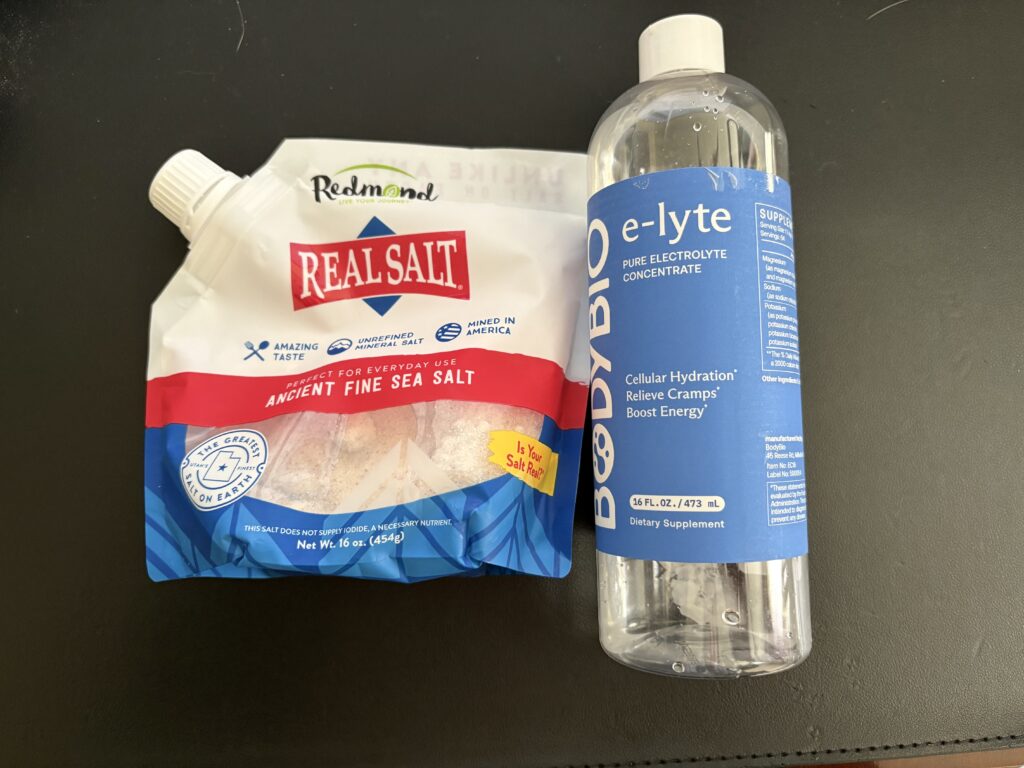
Within days, my energy was back. Like flipping a switch.
Problem solved… or so I thought.
Missing the Foods I Loved
Here’s the truth: carnivore is simple, but it can also be limiting.
After months of eating only meat, I started missing foods I actually enjoyed. So I slowly began adding vegetables back into my meals.
Here’s the funny part: if you gave me the choice between a filet mignon and a big salad, I’d pick the salad every time. (Though honestly, my favorite is to cut up the filet and toss it onto the salad — bonus points if there are fries, like the steak salads I used to get in Pittsburgh.)
These days, my diet looks like this: mostly meat, some vegetables, always adjusted for how my body feels. If my histamine symptoms flare up, I pull back to only meat for a while — and that helps me reset.
For me, carnivore is the reset button I can always rely on — but I don’t stay stuck there forever.
What “Practically Carnivore” Really Means
So what does it mean to eat practically carnivore?
For me, it’s simple: I adapt what I eat to how I feel — not to someone else’s rules.
Mostly animal-based. Meat, butter, and sometimes eggs.
Some plants — but carefully. Like my homemade vegetable soup with low-histamine veggies (carrots, zucchini, potatoes).
Flexibility. A way of eating I can actually stick with.
Practically Carnivore isn’t about strict rules. It’s about building a version of carnivore that actually works for you.
Why I Don’t Follow the Rules 100%
There are a few reasons I’ll never be “strict carnivore only”:
Preference. I love vegetables. A crisp salad or hearty soup makes me happy — and that counts too.
Sustainability. Strict carnivore feels like a sprint. Practically Carnivore feels like something I can live with long-term.
My body. Histamine intolerance means some foods are hit-or-miss. Sometimes veggies work, sometimes they don’t.
Strict carnivore works for some people. For me, it works best as a foundation I can build on and adapt.
An Invitation
If you’ve ever felt pressured to do carnivore “perfectly” or guilty for wanting something different, this space is for you.
Here on Practically Carnivore, I’ll share:
• What I actually eat (the good, the messy, the in-between).
• The products and kitchen tools that make life easier.
• How I adjust when things get tough (like histamine flares).
I’m not here to preach. I’m here to share what practical carnivore looks like in real life.
Because at the end of the day, there isn’t one right way to do this. There’s only the way that works for you.